αCo-founder & CTO · 2026–

Building now

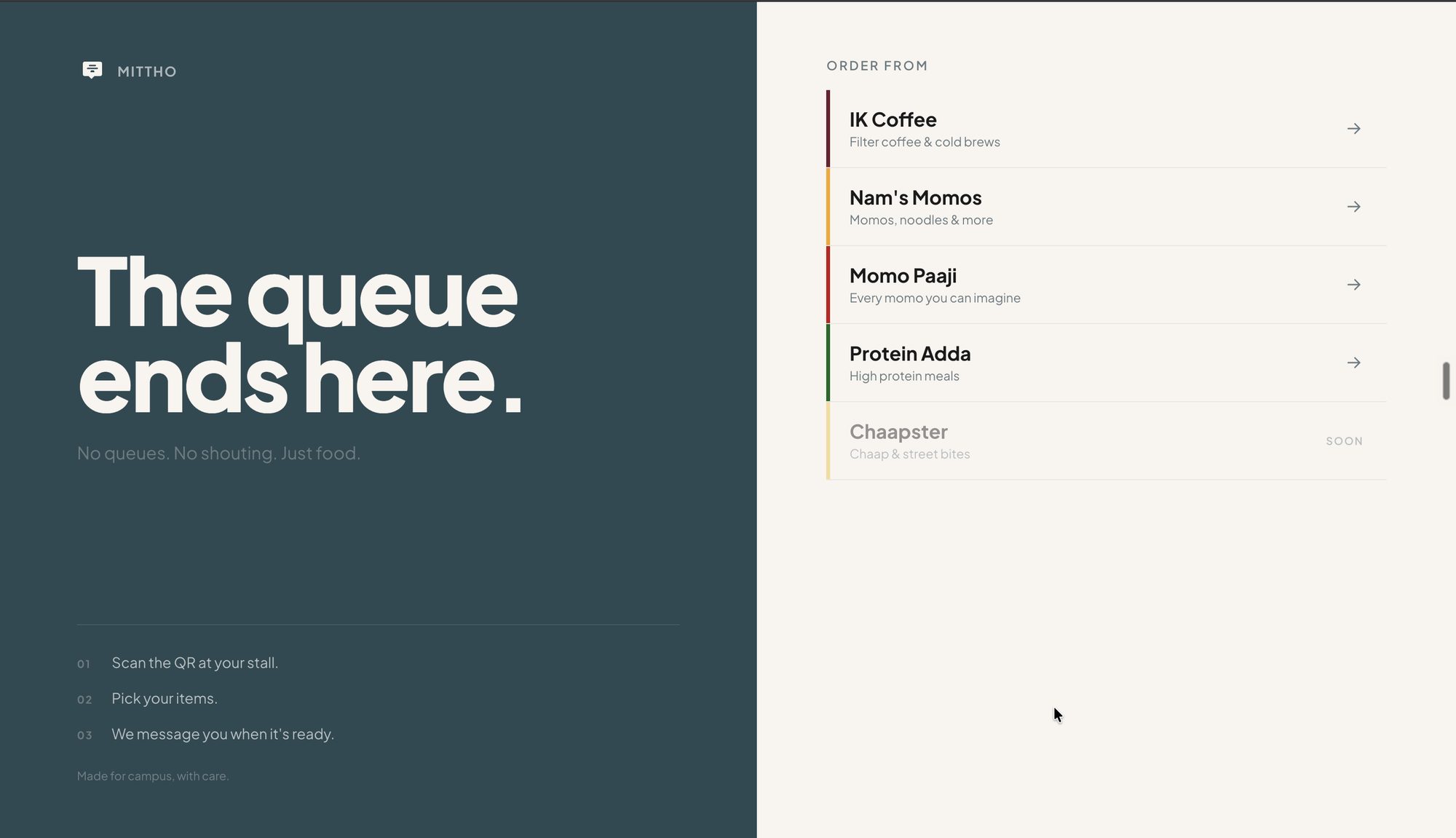
The queue ends here.

Ordering and fulfillment software for small food businesses that don’t need a complicated POS.

Role
Co-founder & CTO
Timeline
Mar 2026 to present
I own
Product, customer and vendor experience
Live
mittho.in
Mittho product screenshot

01The problem

I first ran into the problem as a customer.

I had ordered from a food store in India and was stuck waiting for my order. Calling the store wasn’t much help: the business had one phone number and so many calls that it was often busy.

Working as stall staff at three Delhi University fests, and talking to businesses, showed us the other side of the problem. Orders were being tracked through notebooks, phone calls, and memory. It was difficult to prioritize what needed to be made, easy to miss orders, and frustrating for customers who had to stay near the stall just to find out whether their food was ready.
02The first idea

We initially thought we were building something like Snackpass for in-person food stalls. Then we started talking to vendors.

The problem wasn’t just ordering. Small businesses were also struggling to manage incoming orders, communicate wait times, pause orders, handle unavailable items, and keep the kitchen moving.

So we changed the product.

03Building the first version

I owned Mittho’s product end-to-end, from the initial workflow through customer and vendor experience, while my cofounder handles sales and business development.

The first principle was simple: as few clicks as possible.

Customers should be able to order quickly and leave. Vendors should be able to see what needs to be made without learning complicated software.

We kept parts of the system manual. Vendors cared more about receiving and fulfilling orders than having sophisticated analytics. So instead of building infrastructure nobody had asked for, we kept the backend simple and focused on the workflow that mattered.

04Iteration

We kept watching what happened after an order was placed.

Vendors needed to pause orders. They needed to remove unavailable items. They needed to prioritize what should be made first. Customers needed to know when they could actually come back.

So the product grew around those problems rather than around a predetermined feature list.

Pause ordering

Stop new orders during a rush.

Remove items

Take sold-out items off the menu.

Priority sorting

See what to make first.

Ready WhatsApp message

Tell customers when to come back.

Batching

Groups identical dishes across orders.

Owner insights

See what sells, when, and when you’re idle, even away from the stall.

Order ahead

Regulars order 10 to 15 minutes ahead, and the cook is told to start.

05Both sides of the counter

The customer shouldn’t have to think.

Instead of waiting at the stall or repeatedly asking whether an order is ready, customers get a WhatsApp message when their order is ready.

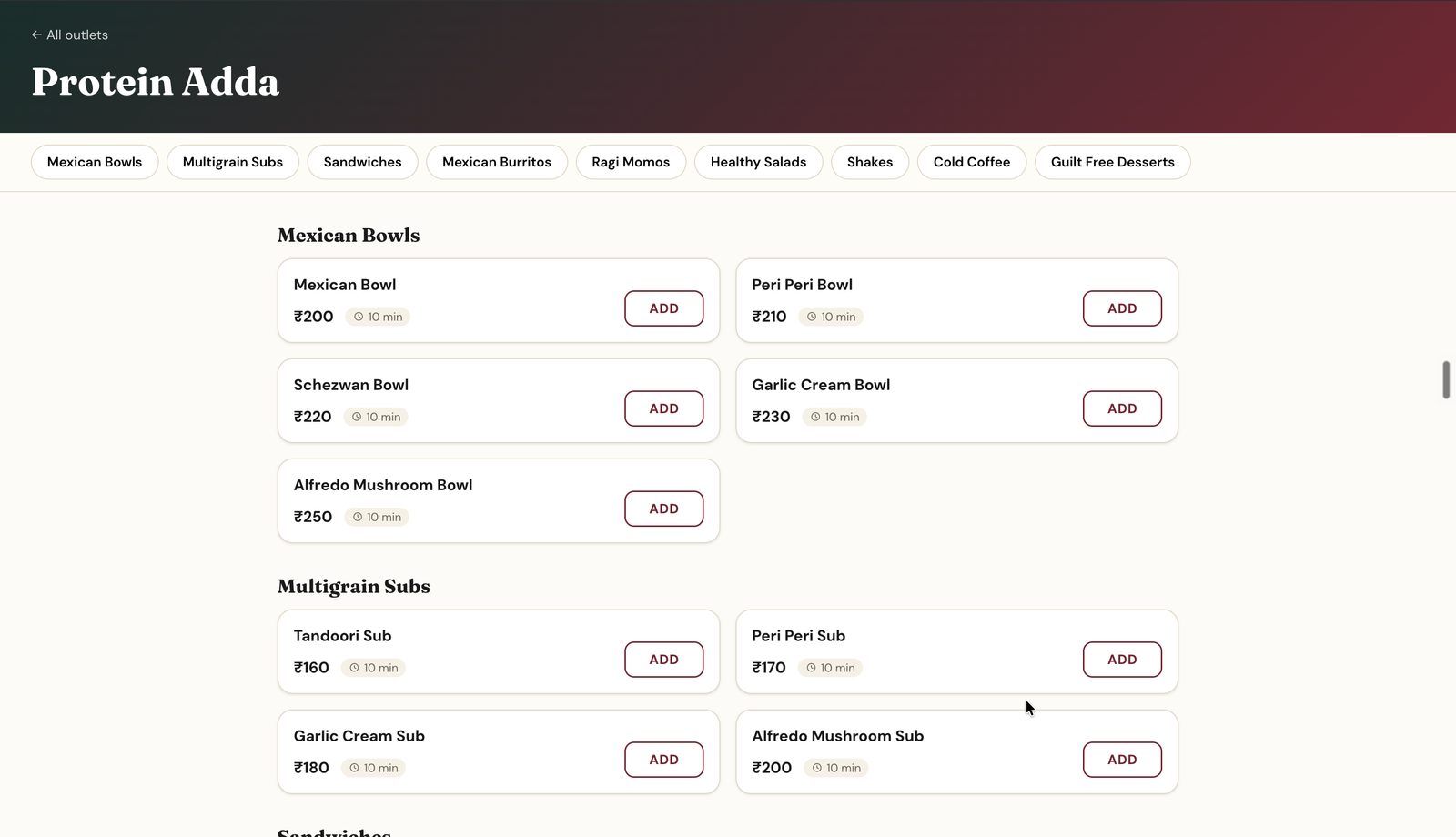
Customer ordering screen

Two taps for the kitchen.

The vendor workflow is intentionally simple: tap confirm, then tap ready.

Vendor queue screen
Vendor queue screen

06Distribution was part of product

Our first users didn’t come from ads or a launch campaign. We walked into businesses, talked to owners, showed them what we’d built, and asked them to try it.

Those conversations changed the product as much as the code did.

BuildShowWatchFixRepeat

07Traction

  • ~40,000orders in the last 30 days
  • 15paying stalls, 0 churn
  • 23%faster order-to-ready from batching (10.9 → 8.4 min average)
  • <1%missed orders in the early pilot

08What’s next: helping the kitchen think

Next, we’re using order data across stalls to give owners AI dish recommendations and show them what’s trending nearby.

The goal isn’t to build more software. It’s to make the kitchen move faster.

© 2026 Kaavya Kochar. All rights reserved.